Payments
|
December 18, 2025
-
6 MINS READ
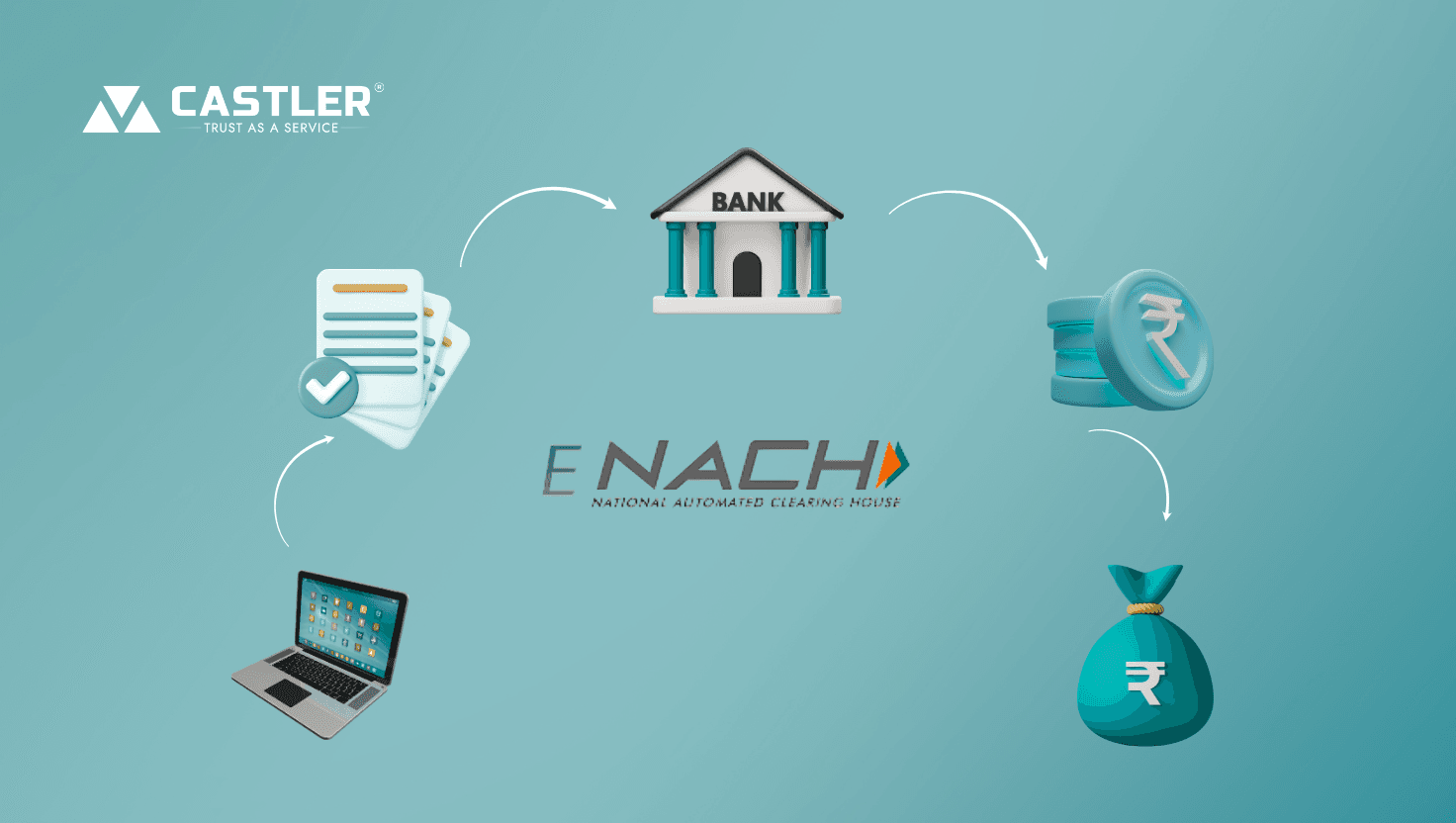
Recurring payments have become essential in today’s financial services. Businesses rely on automated debit systems to collect loan EMIs, insurance premiums, and subscription payments on time. A key player in this shift is eNACH registration. This digital mandate system allows organizations to directly collect recurring payments from customers’ bank accounts in a secure and regulated way.
eNACH, which stands for Electronic National Automated Clearing House, is overseen by the National Payments Corporation of India (NPCI). It is widely used by banks, NBFCs, fintech platforms, and companies. The eNACH registration process replaces paper mandates with a quicker, digital option. This change reduces operational issues and improves customer convenience.
This blog aims to inform and increase awareness. It explains what eNACH registration is, details the registration process, lists the requirements, and highlights what businesses should consider when implementing it.
What Is eNACH Registration?
eNACH registration is the process of creating and verifying a digital mandate. This mandate allows a business to debit a fixed or variable amount from a customer’s bank account regularly. Once a mandate is registered, it enables automated collections without needing customer action for every transaction.
Unlike traditional ECS or paper mandates, eNACH functions fully online. Customers can authenticate mandates using net banking, debit cards, or Aadhaar methods, depending on their bank's options.
At a system level, eNACH offers a standard framework for recurring debits across banks. This ensures security, interoperability, and regulatory compliance. More information on NACH and eNACH can be found on NPCI’s official website: https://www.npci.org.in
Why eNACH Registration Matters in Today’s Payment Ecosystem
Manual payment collection methods can lead to delays, defaults, and reconciliation problems. For businesses dealing with many recurring payments, even minor issues can lead to major operational difficulties.
eNACH registration tackles these problems by bringing automation and predictability to collections. Once a mandate is registered, payments are automatically triggered as scheduled, reducing the need for reminders or manual follow-ups.
For customers, eNACH provides convenience and consistency. For businesses, it enhances cash flow visibility and minimizes collection risks. This combination has made eNACH registration a favored choice for recurring payments across various industries.
How the eNACH Registration Process Works
The eNACH registration process follows a clear workflow that ensures consent, security, and accuracy. While specific steps may vary, the overall process is consistent.
Initiation of the Mandate
The process starts when a business requests a mandate from a customer. This includes specifying mandate details like the maximum debit amount, frequency, validity period, and purpose.
These details are communicated to the customer through a digital interface, ensuring transparency before obtaining consent.
Customer Authentication
After the mandate request is made, the customer must authenticate it using an approved method. Common authentication methods include net banking, debit card verification, or Aadhaar-based authentication.
This step guarantees that the mandate is authorized by the account holder, preventing consent disputes.
Bank Validation and Approval
Once authenticated, the customer’s bank verifies the mandate details. The bank checks the account status, validates authentication details, and ensures the mandate meets internal and regulatory standards.
Only after successful validation does the mandate become active.
Mandate Registration and Activation
After approval, the mandate is registered in the NACH system and activated. From this point, the business can initiate debit requests based on the mandate terms without needing repeated customer authorization.
This process is designed to be faster and more reliable than traditional paper-based registration.
Key Requirements for eNACH Registration
Successful eNACH registration depends on meeting specific operational and compliance needs. These requirements protect both businesses and customers while ensuring the mandate's integrity.
Some primary requirements include:
Accurate customer bank account details
Clear mandate terms, including amount and frequency
Valid customer authentication credentials
Compliance with NPCI and banking standards
Businesses also need systems to initiate mandates, track their status, and manage debit cycles effectively.
Types of eNACH Mandates
eNACH supports different types of mandates based on payment nature.
Fixed-amount mandates apply when the debit amount is constant, such as loan EMIs. In contrast, variable-amount mandates cater to fluctuating amounts, like utility bills or credit card payments, within a set limit.
Understanding the mandate type is crucial in the eNACH registration process, as it influences how debits are initiated and communicated to customers.
Security and Compliance in eNACH Registration
Security is a key aspect of eNACH registration. The system prevents mandates from being created, changed, or executed without proper authorization.
Security features include encrypted data transmission, bank-level authentication, and audit trails for every mandate action. These measures help reduce fraud and unauthorized debits.
From a compliance standpoint, eNACH aligns with RBI and NPCI guidelines concerning recurring payments. Regulatory updates related to digital payments and mandates can be found on the Reserve Bank of India’s official website: https://www.rbi.org.in
Operational Considerations for Businesses
While eNACH registration streamlines collections, businesses must ensure they are operationally ready before implementation. This involves integrating mandate initiation, tracking, and reconciliation into existing payment workflows.
Error management is also important. Businesses should have systems in place to handle failed authentications, mandate rejections, or debit failures without harming customer relationships.
Clear communication about mandate terms and debit schedules is critical for reducing disputes and building trust.
Customer Experience and Transparency
An effective eNACH registration process focuses on customer clarity. Customers should easily view mandate details, understand debit schedules, and revoke mandates if needed.
Transparency fosters trust and reduces friction, particularly for long-term mandates. Businesses that see eNACH as part of the customer experience often achieve higher success rates for mandates.
Common Challenges in eNACH Registration
Despite its benefits, eNACH registration can encounter challenges if not managed carefully. Issues such as authentication failures, incomplete customer data, or lack of awareness can lead to drop-offs.
Managing mandates across various banks, each with its own processes, poses another challenge. This makes standardization and automation vital for scalability.
Addressing these challenges requires strong technology, clear communication, and operational discipline.
Role of Technology in Scaling eNACH Registration
Technology is crucial for enabling widespread eNACH registration. Automated workflows allow businesses to initiate mandates, track their status in real time, and manage debit cycles efficiently.
Dashboards and reporting tools give insights into mandate performance, success rates, and reasons for failures. This data-driven approach helps businesses continuously improve collections.
Conclusion
eNACH registration has become a key part of automated recurring payments in India’s digital payments landscape. By replacing manual mandates with a safe, standardized digital process, eNACH allows businesses to enhance collection efficiency while providing customers with a convenient and transparent payment experience.
Understanding the eNACH registration process, requirements, and operational considerations is vital for organizations that rely on recurring payments. When done correctly, eNACH reduces friction, improves predictability, and supports compliance across payment cycles.
For businesses wanting to implement or scale recurring payment systems, a solid Castler solution provides the infrastructure needed to manage eNACH workflows securely and efficiently.
Written By

Chhalak Pathak
Marketing Manager